
You do not need an American visa to stand in Accra, or Nairobi, or Kigali, and you do not need to change planes in Miami to get there. For thirty years I have watched Caribbean people believe the opposite and cancel the trip, or the deal, before it ever began. It is one of the most expensive myths we carry. So let me do what this column has always done, and settle it with the facts.
The paperwork is the easy part
For a traveller from the Caribbean, getting into much of Africa is now easier than getting a US tourist visa, and in one or two cases it is free.
Rwanda waves you straight in
Rwanda decided some time ago that Africa should move the way Europe's Schengen zone moves. Since 2018 it has offered a visa on arrival to every nationality on earth, and it keeps a shorter list of countries whose citizens pay nothing at all. Guyana and Jamaica are both on that fee-waived list: a 30-day stay, stamped when you land in Kigali, no application filed in advance, no fee collected. Check your own passport before you pack, because the terms differ by nationality, but for two of our biggest passports the door is simply open. (Source: Rwanda's Directorate General of Immigration and Emigration.)
Kenya did away with the visa altogether
In January 2024 Kenya went further and abolished the tourist visa outright. In its place is an Electronic Travel Authorisation, an eTA you apply for online, for roughly US$30, and carry on your phone. It is not a visa; it is a permission slip, and it is open to all of us. You fill it in a few days before you fly. That is the whole of it.
Ghana has been calling you home
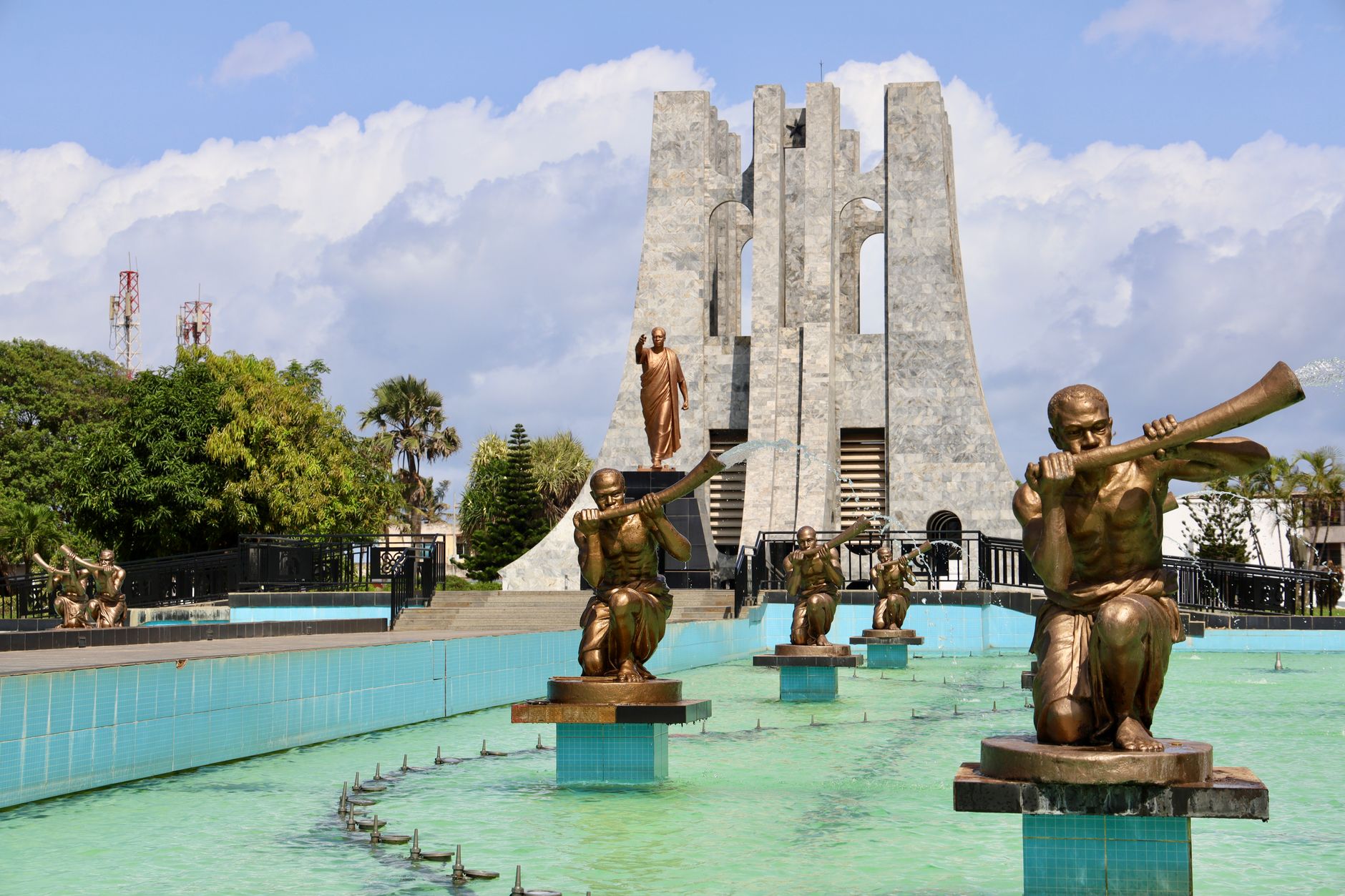
Ghana is the one that gets people in the chest. In 2019 it declared the Year of Return, four hundred years after the first enslaved Africans were carried across the Atlantic, and invited the whole diaspora, the Caribbean named explicitly, to come back. The president toured five Caribbean nations to say so in person. More than a million visitors arrived that year. A Caribbean traveller today still applies for an e-visa rather than walking straight through, so be clear-eyed about that. But understand the spirit you are walking into. This is a country that sent a delegation to our islands to ask us to visit. Heritage there is not a marketing line. It is the welcome.
And the direction of travel is only one way. Rwanda, the Gambia, Benin and the Seychelles already wave in every African passport, and Ghana has announced it intends to join them. A whole continent is deciding to make itself easier to enter, at the very moment the counters we are most used to are making themselves harder.
And now, the part that changed this year
For thirty years the honest answer to "how do I fly to Africa from here" was the same tired one: you connect somewhere, and too often that somewhere was Miami or New York, chosen out of pure habit, where a traveller carrying one of our passports could lose an entire trip to a transit visa nobody warned them about. There was no direct flight between the Caribbean and Africa. Not one.
Then, in May 2026, that sentence stopped being true. Air Peace put a Boeing 777 in the air between Lagos and Accra and Barbados and Antigua. It is the first-ever scheduled nonstop service between West Africa and the Caribbean. Roughly eight to nine hours, Lagos to Bridgetown, over the same water our ancestors were carried across the other way. It runs twice a month for now, on the last two Mondays, as a seasonal service, so it is early days, and you should always check the current dates with the airline before you plan around them. But the wall is down. After four hundred years of routing our lives through other people's capitals, there is a plane that simply goes.
If you are not in Barbados or Antigua, the arithmetic is still kind: you hop across to one of them on the regional carriers we already use (no US, no Europe, no visa) and step onto the same aircraft. One or two easy legs, entirely within our world.
Two practical notes before you get excited and book. First, carry a valid Yellow Fever vaccination certificate. It is required, and a missing card has ended more African trips at the gate than any visa ever did. Second, on a service this new and this occasional, the timing is everything, and stitching the connection, the entry rule and the return together is still a real skill rather than a search box. That is the precise piece we built the journey planner to handle, and the piece a full corridor brief exists to get right. You can price a no-US-visa route to Africa on it right now.
Why this matters more than a holiday
I am not really writing to you about a holiday. The founders I route this way make their meetings in the end, the sensible way, with no US visa and no Miami, and they come home with distributors and orders. That is the corridor I want you to see: not tourists, but Caribbean founders and exporters treating Africa as what it is, a market of more than a billion people that increasingly asks us for nothing at the door.
For the generation that reads this the way you once read Cruising 101, the map has shifted in our favour. My last piece was about why I picked the pen back up. This one is about where I think you should be looking next.
So, the same way I always close: is there a corridor, Africa, Europe, or right across our own Caribbean, that you have been told is shut to your passport? Write to me. Let us check it together. You may well find the door was open the whole time.